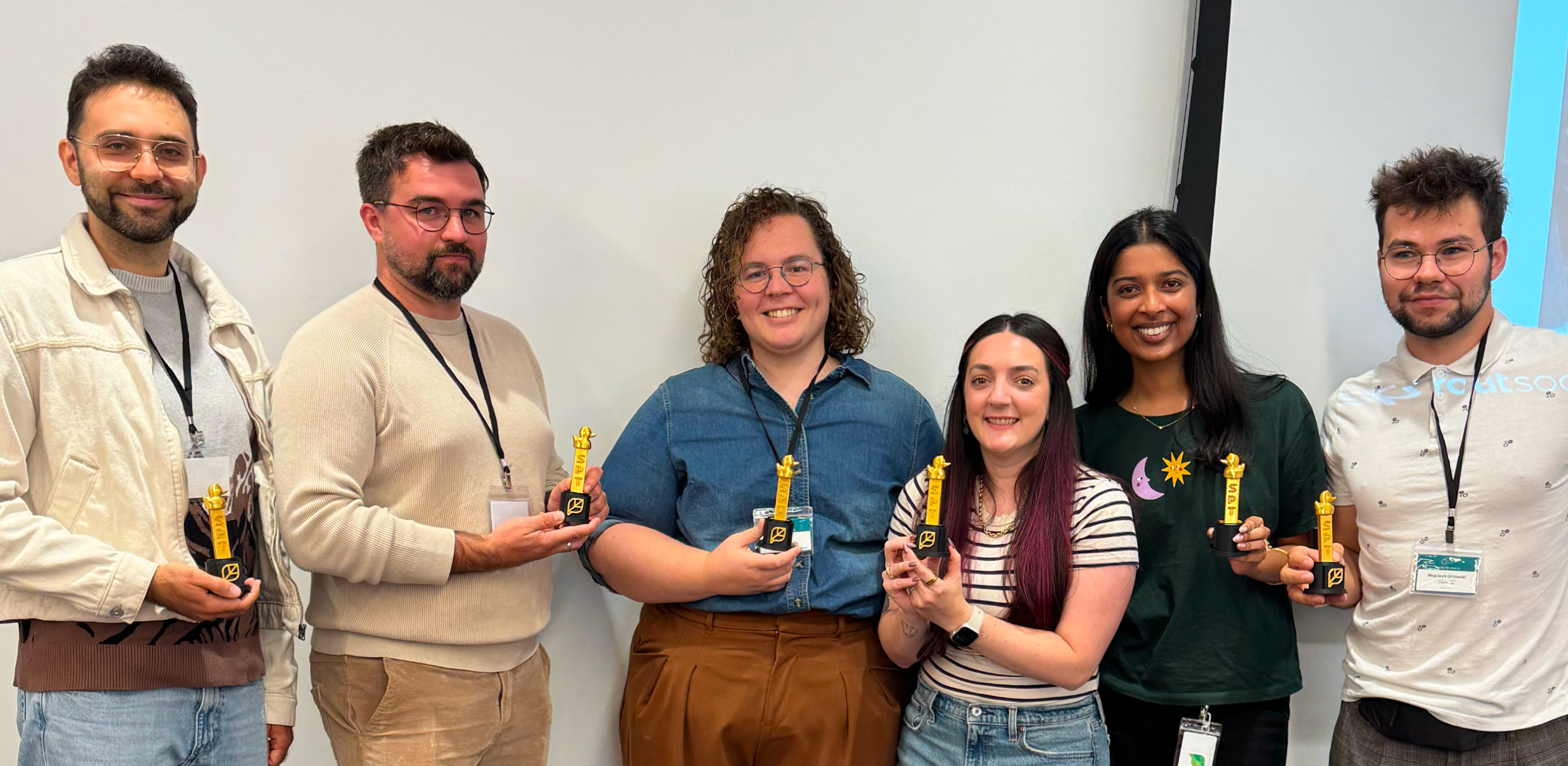
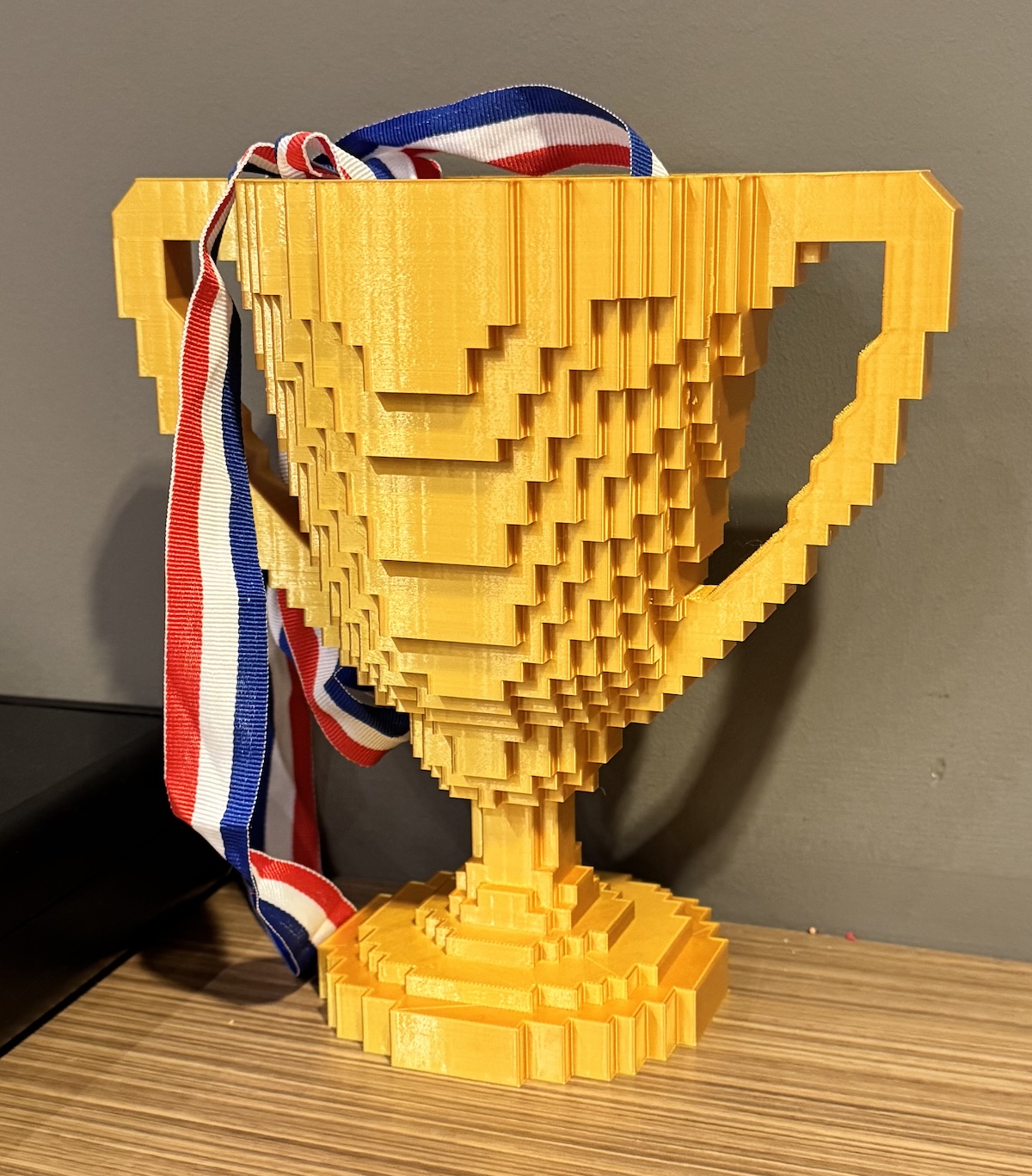
For remote teams, there’s always pressure to make our rare, in-person time valuable. Spending an hour of a 2-day onsite on a silly game might seem like a waste, but I’ve found that a little competition and abstract problem solving is a great way to help people connect. Every year, I plan some kind of unique, team building game for Sprout Social’s meetups. I kept that streak alive at last week’s onsite and also tried something different: a hands-on empathy exercise that put our Publishing and Mobile teams through a simulated day in the life of the social media managers we build for.
A Quick History of our Onsite Games
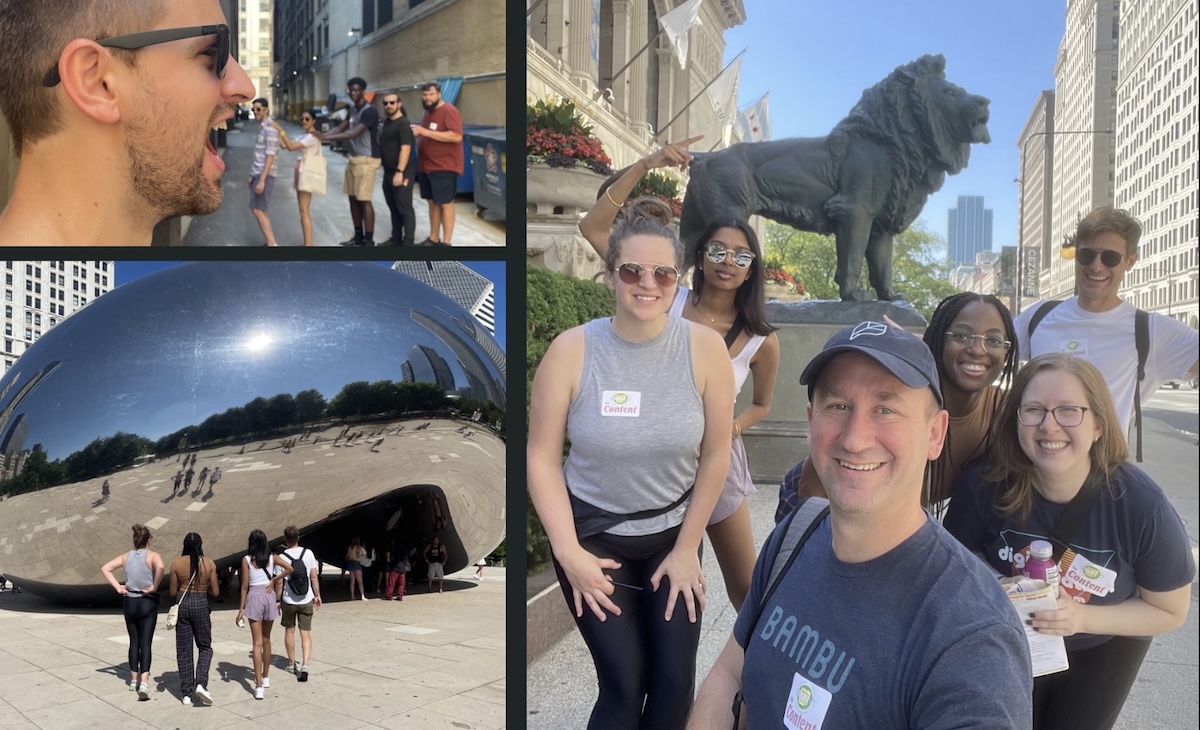
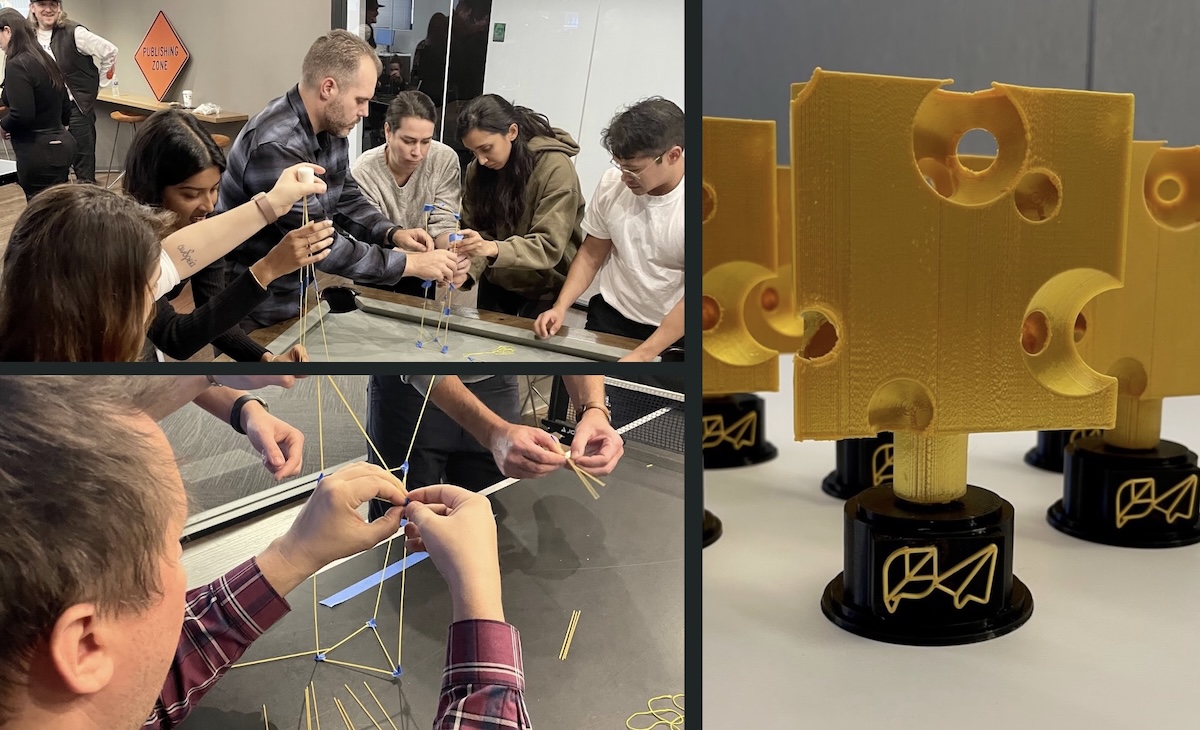
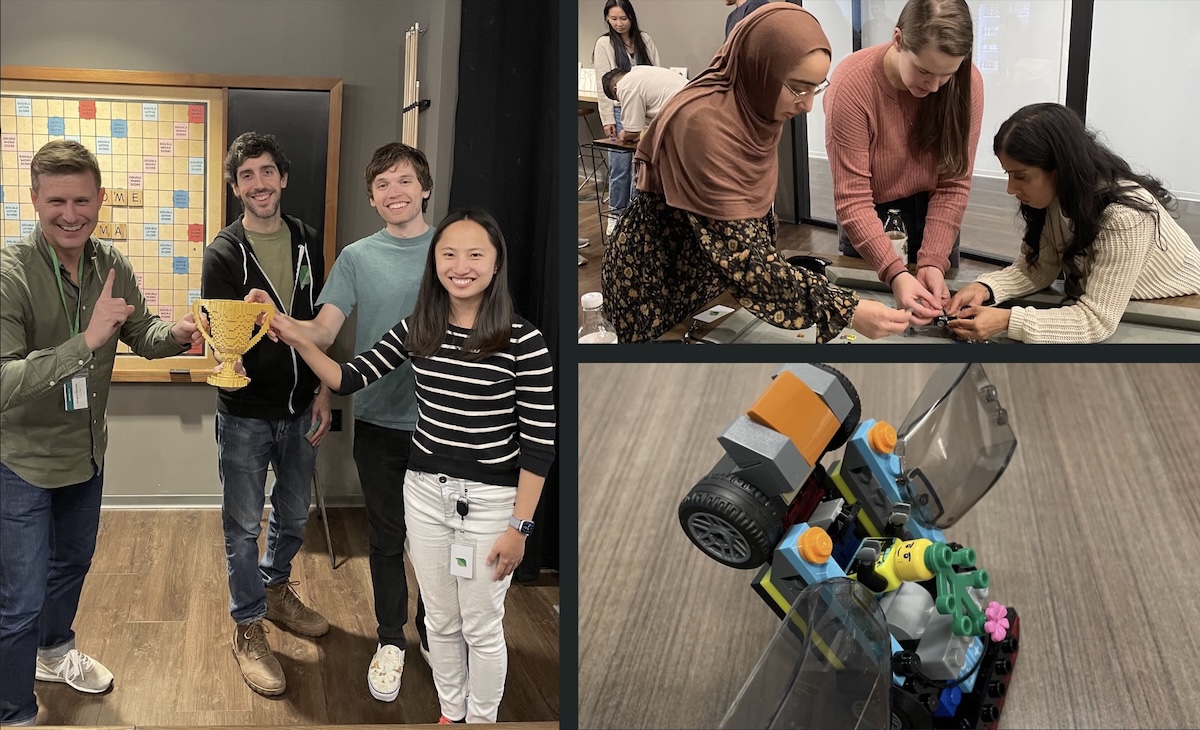
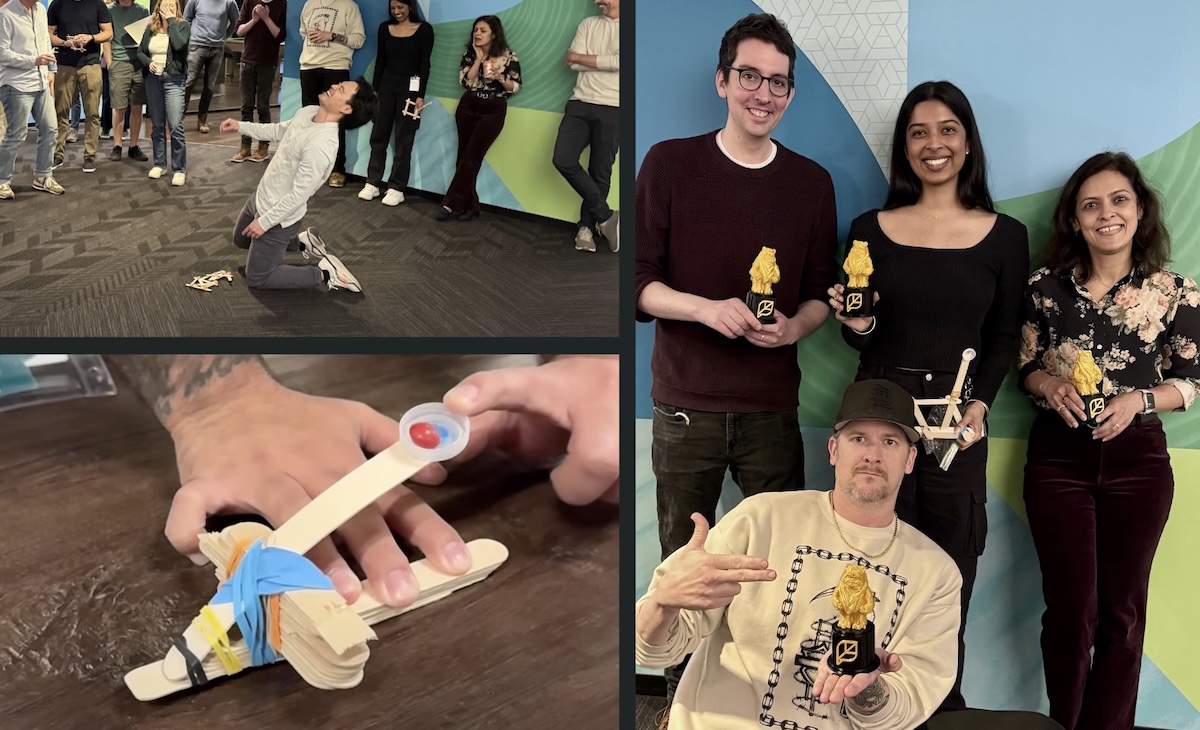
It all started with a scavenger hunt. While helping plan a team meetup in 2022, I decided to spend our activity budget on Cashunt’s Chicago Mad Dash experience. We all had a blast running around downtown Chicago, recording videos and taking goofy photos at landmark spots. In 2023, I organized a Spaghetti Marshmallow Challenge, where teams raced to build the tallest free-standing tower out of spaghetti, tape, and string that could hold up a marshmallow. 2024 brought a blind Lego build competition, where one “runner” per team had to study a hidden reference build and relay the instructions back to their teammates from memory. Last year was my favorite so far: an Ewok-themed catapult competition.
2026 Game Theme: Dystopian Sci-fi?

As I was trying to come up with an activity for this year’s meetup, I had a much bigger group to plan for. A recent reorg brought four teams with very little overlap together into a single product zone. At the time, I had just started Season 3 of Silo, and that seemed like a perfect theme to build from.
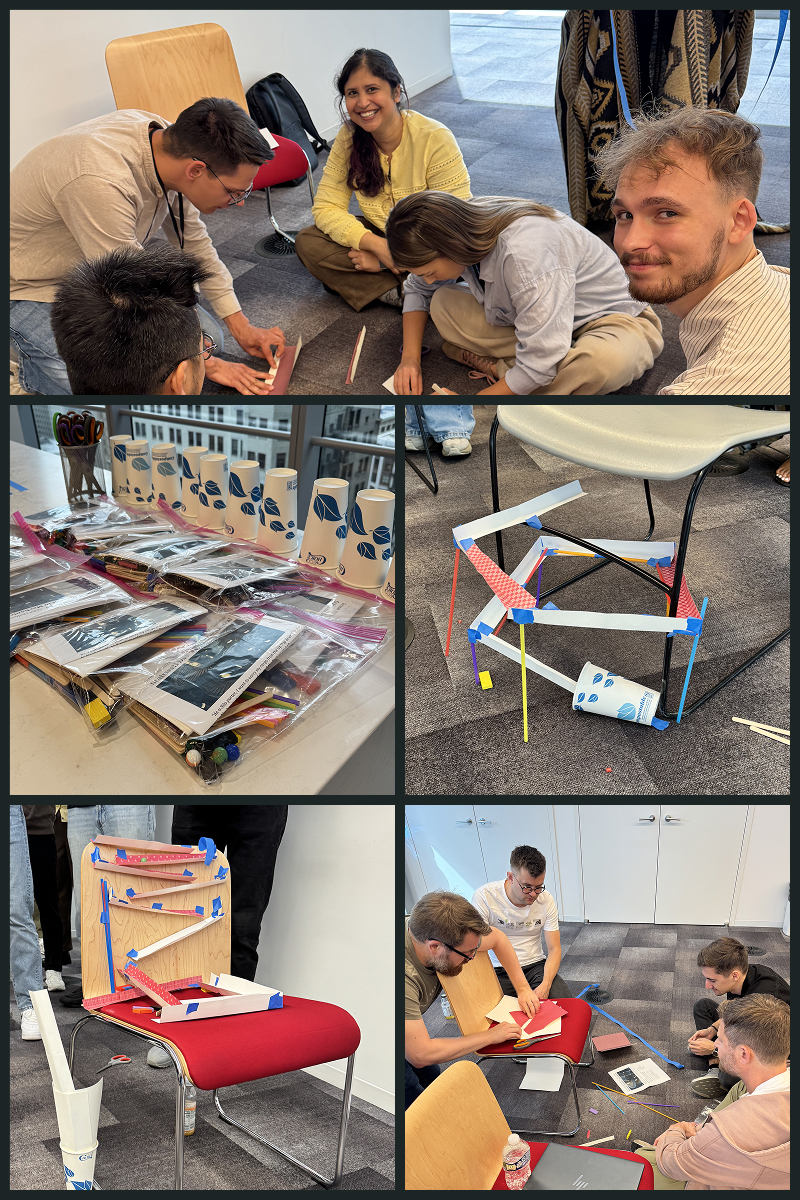
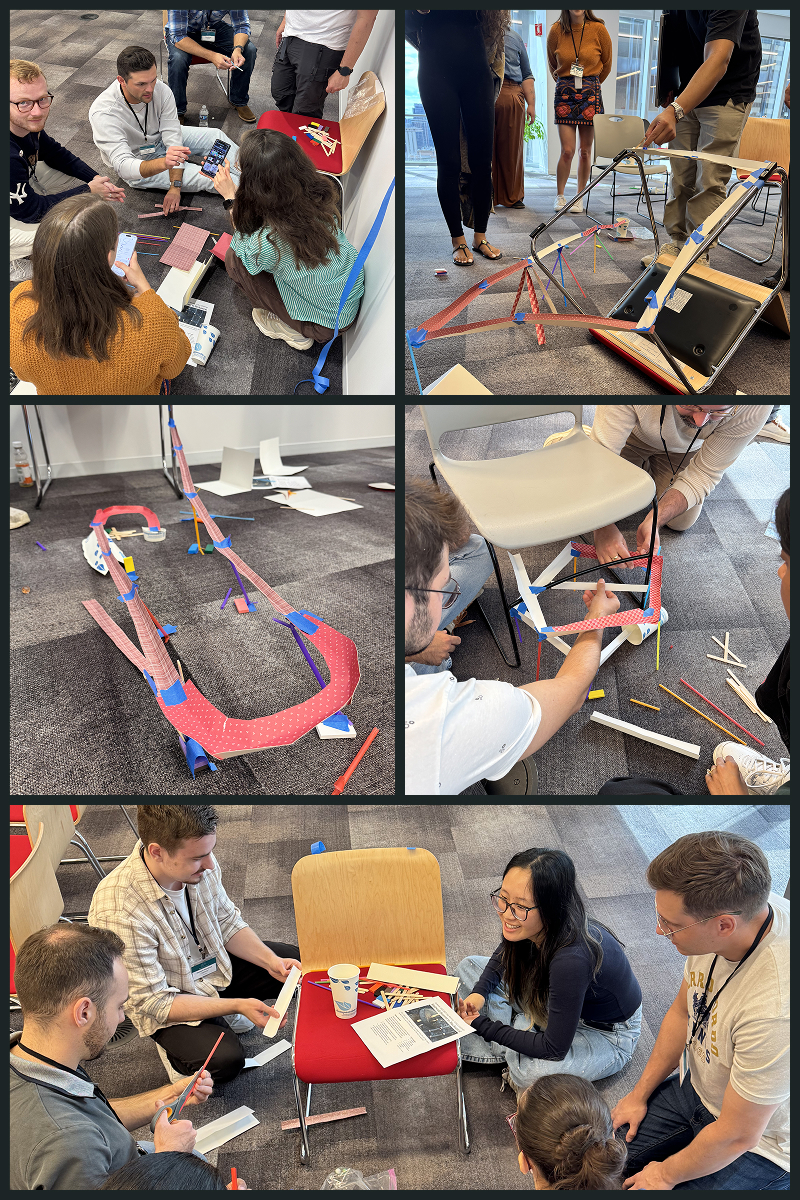
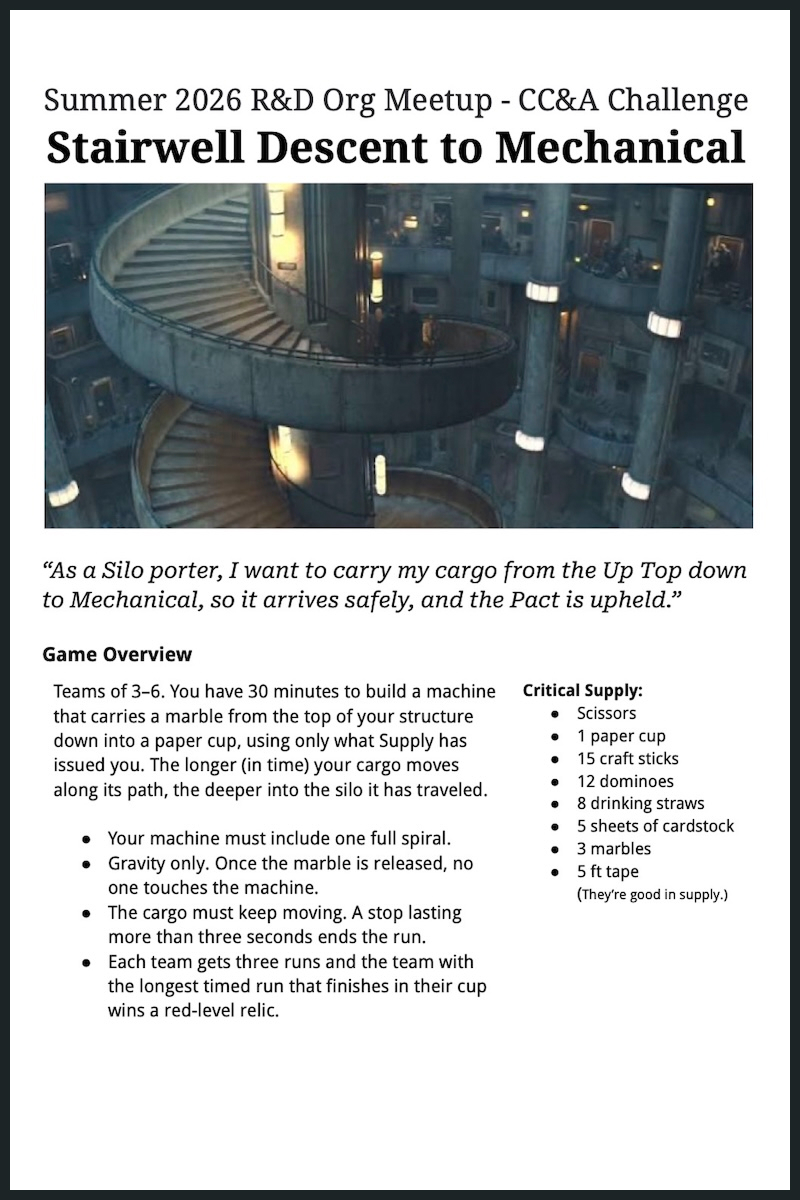
I gave randomized teams of 4–6 individuals 30 minutes with a shared kit of cardstock, craft sticks, straws, and dominoes to build a marble run into a paper cup. As an ode to the spiral staircases in each Silo, the build had to include one full spiral (at least 360 degrees of switchbacks) and the marble couldn’t stop moving for more than three seconds or the run was disqualified.
Instead of building for speed or height, the winner was decided by how slowly they could get a marble from start to the end of their track. When the build time was up, nobody could touch their machines. We walked around to each creation and the team got three marbles to roll. Unlike my tabletop play test, the room we were in had carpet and chairs, so I allowed the teams to incorporate a chair into their design.
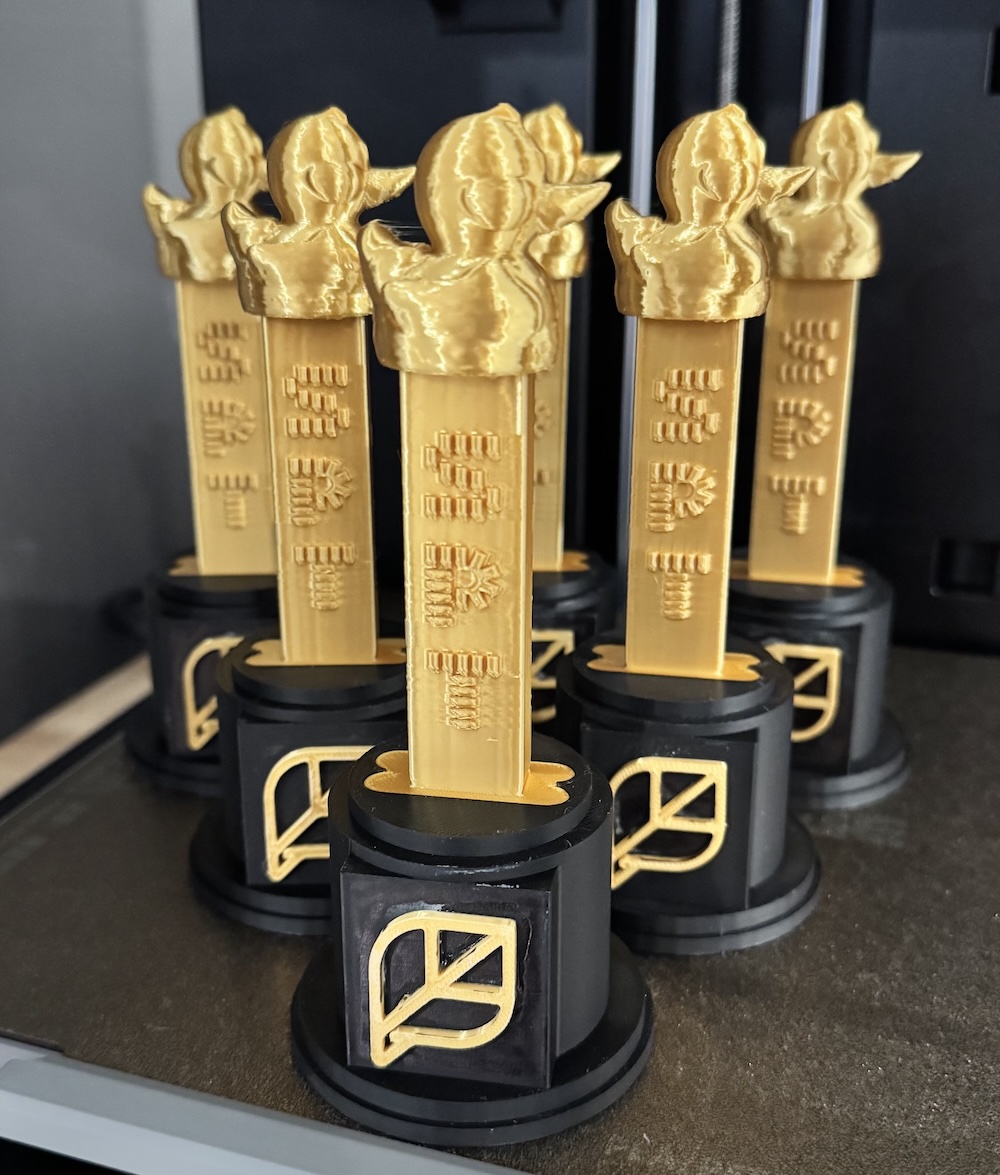
The prize for each member of the winning team was a 3D-printed trophy I created featuring a gold replica of a “red level relic” from the show, a duck Pez dispenser. Many thanks to @Botcan3d for sharing a model that I was able to build into a trophy. We ended up with six very different marble runs, but only two of them successfully carried a marble all the way to their paper cup and the winning team had a run time of about ten seconds. Everyone got into it, and worked hard together, so it was a great time!
The Empathy Exercise: Feeling the Tool Hopping Friction
The other meetup activity I was responsible for last week wasn’t a game so much as a simulation. Having worked on Publishing tools and Mobile apps at Sprout for many years, it’s easy to see our product problems from a builder perspective instead of through the eyes of our users. As AI continues to reshape tech and marketing, the web of tools that people are using around SaaS products is getting more complicated.
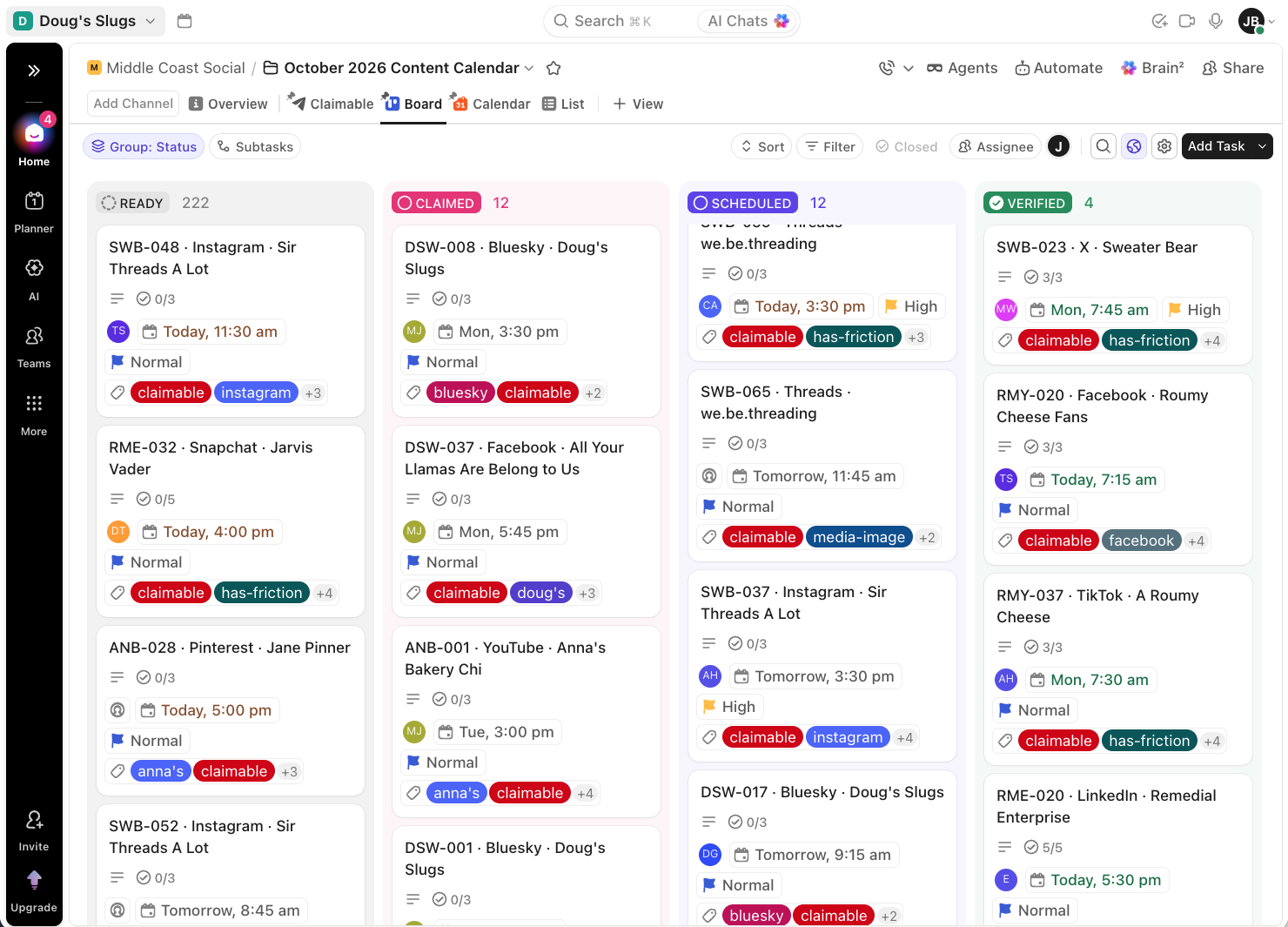
Regularly exposing our teams to recent user interview clips, session recordings, and other user inputs helps ensure we’re focused on the right problems, and that we understand how people use the features we build. In order to truly empathize with their needs though, I planned an activity to put ourselves in their shoes. We spent an hour LARPing as the social team for a small marketing agency, scheduling social content for eleven social profiles across six networks, for five different fictional clients. Our job was to schedule posts that were planned in a project management system called ClickUp, with assets located in Google Drive and Canva.
We’ve run empathy exercises before, but never this complicated. I used Claude to generate 200+ fictional posts, collect image and video content from Pexels, and create the ClickUp tasks. I intentionally added extra chaos by including a brand guide in Google Docs that schedulers had to reference for some of the clients’ individual approval requirements and quirks.
Participants claimed posts from the pool, tracked down the required assets, dealt with contradictory client feedback, and scheduled real social posts the way an actual social media manager would, one browser tab and one app switch at a time. In over 30 minutes of dedicated heads-down time, nobody scheduled more than five posts. As I had hoped, it was a gloriously frustrating experience that helped us identify some impactful improvements we could make and taught us a lot about the pain points that really matter to our users.